Industry
UX Designer
Client
ABC's American Idol
Live Voting Experience Design
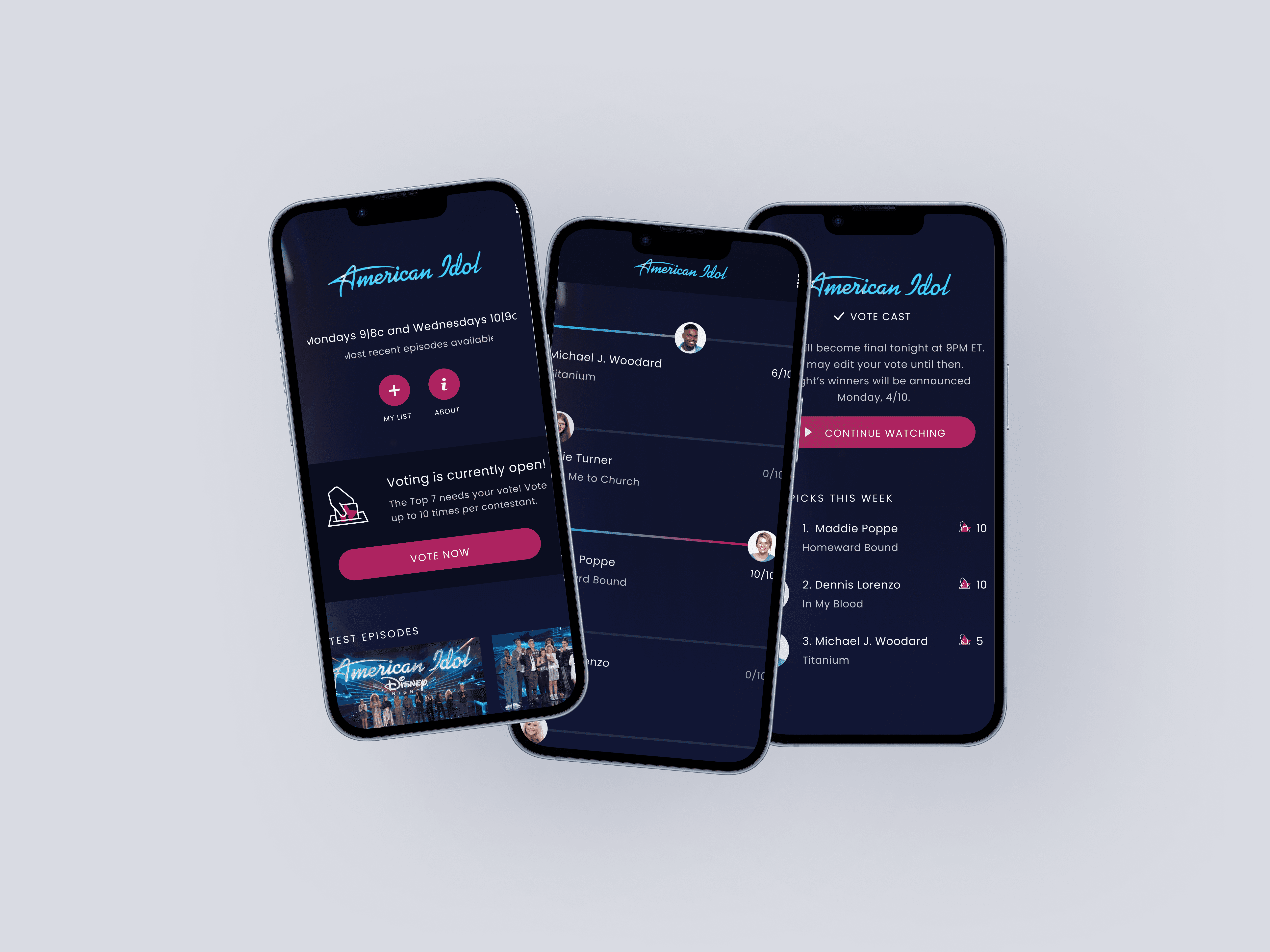
Designing Real-Time Engagement for Live Television
American Idol is one of the most-watched live television programs in the U.S., with millions of viewers participating in voting during narrow live windows. Voting is a critical engagement moment, both emotionally for fans and operationally for the business. This project focused on improving the clarity, reliability, and accessibility of the live voting experience while ensuring the system could scale under peak traffic and time-sensitive constraints.
The Problem
Live voting occurs within narrow, high-pressure windows where millions of viewers must act quickly and confidently. Any friction, delay, or ambiguity risks lost engagement, repeated actions, or erosion of trust in the outcome.
The existing experience made it difficult for viewers to understand when and how to vote, feel confident their vote was submitted, and recover gracefully from errors during peak traffic.
For the business, these issues risked lost engagement during critical live moments, increased support burden, and reduced trust in the voting process.
Goal
Improve clarity and confidence during live voting windows
Reduce friction and failure points under peak load
Design a scalable voting system that supports future seasons and formats
Ensure accessibility across devices, audiences, and contexts
Approach
I approached this project by designing for high-stakes, time-bound interactions, where clarity, speed, and trust mattered more than feature depth.
Working closely with product, engineering, and broadcast stakeholders, I focused on understanding how live voting intersected with:
Show timing and broadcast cues
Peak traffic and system constraints
Viewer expectations during real-time participation
Key steps in the approach included:
Mapping the end-to-end voting journey from intent to confirmation
Identifying friction points caused by ambiguity, latency, or unclear system feedback
Prioritizing states, messaging, and feedback that reduced uncertainty during live moments
The goal was to help users act quickly and confidently without second-guessing whether their vote counted.

Solution
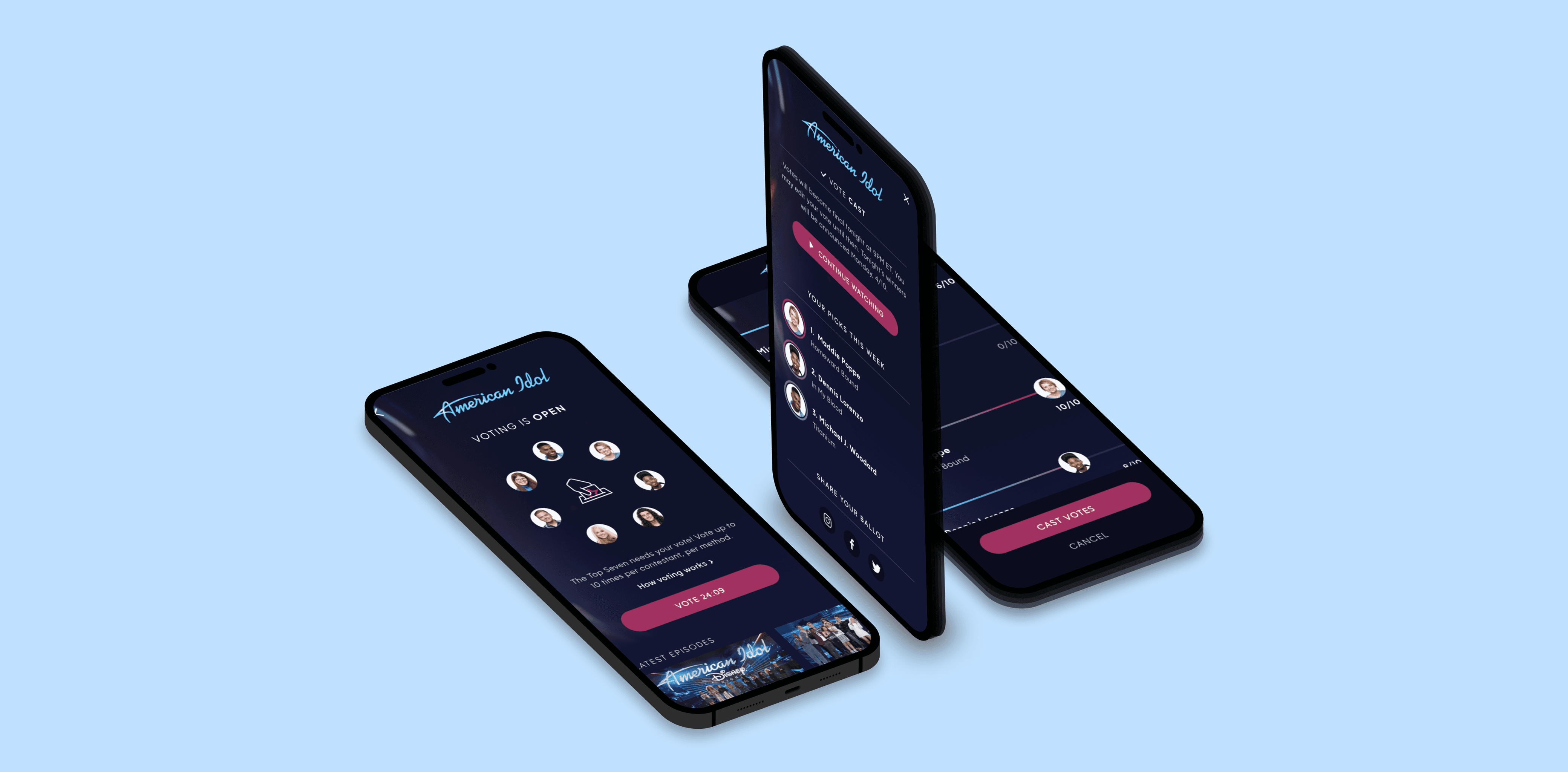
The redesigned voting experience focused on reducing ambiguity and reinforcing trust at every step of the flow.
Key improvements included:
A simplified, linear voting flow that clearly communicated eligibility, timing, and progress
Strong visual and system feedback to confirm vote submission in real time
Clear handling of loading, errors, and edge cases during peak traffic moments
A consistent interaction model that aligned with live show pacing and user expectations
The result was a more resilient, confidence-driven voting experience that helped viewers move from intent to confirmation with minimal friction—while supporting the scale and reliability required for live television.

Key Design Decisions
Clarity over cleverness
Voting flows were designed to be unmistakable, removing unnecessary steps or ambiguity during high-pressure moments.
Confidence through feedback
Immediate visual confirmation reassured users that their vote was counted, reducing repeat actions and frustration.
Designed for peak load
UI patterns accounted for latency, retries, and system delays without breaking trust or flow.
Scalable by default
The experience was built to support future seasons, rule changes, and voting mechanisms without rework.
Impact
This work helped strengthen one of American Idol’s most critical engagement moments by improving both user confidence and system resilience.
The redesigned experience:
Reduced friction during live voting windows
Increased clarity around vote submission and timing
Improved trust in the fairness and reliability of the process
Established scalable patterns for future seasons and formats
The redesigned flow reduced ambiguity during live voting windows, helping viewers move from intent to confirmation with fewer retries and clearer feedback.