Industry
Product Designer
Client
Weedmaps
Improving Product Discovery at Scale
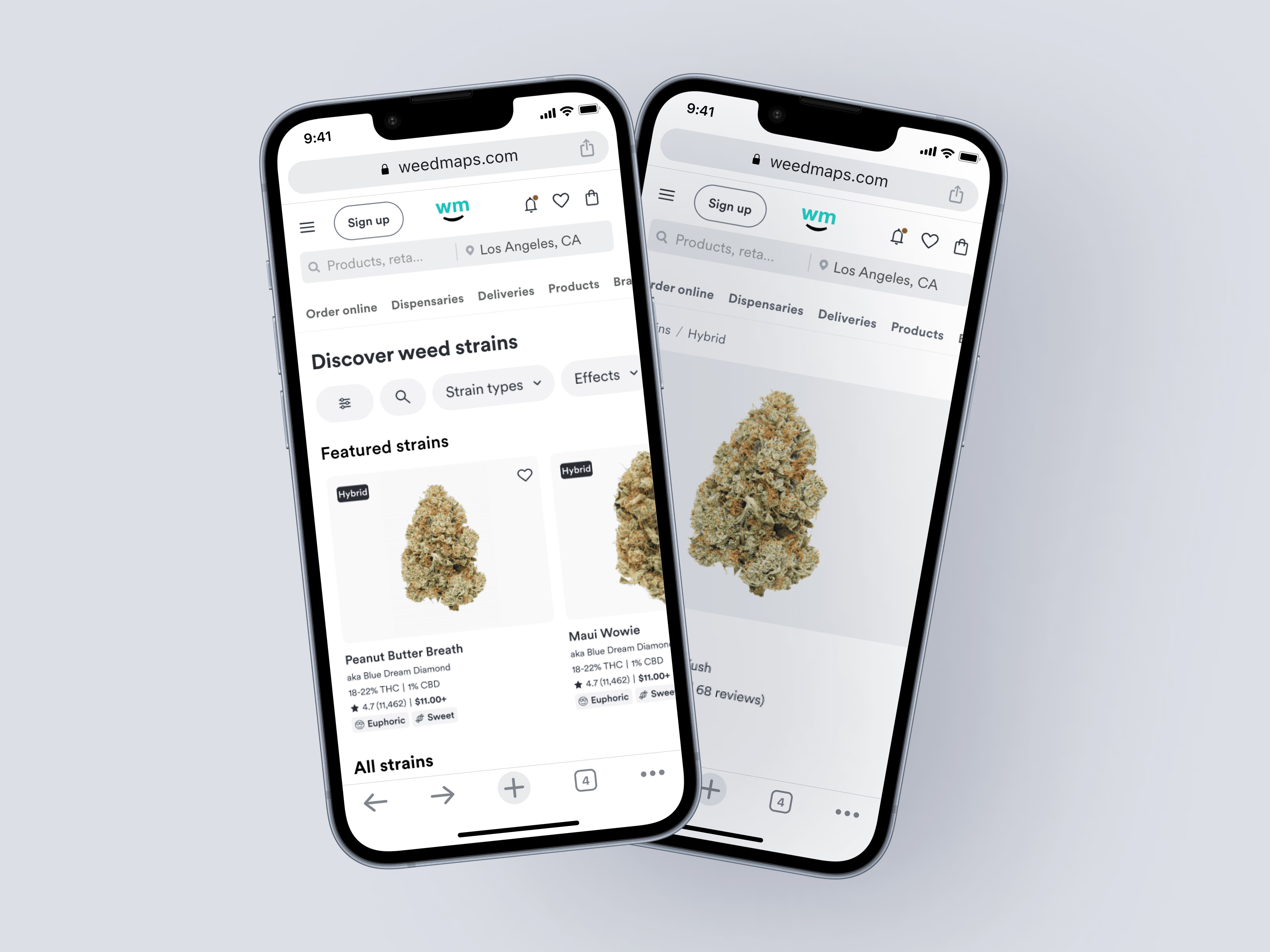
Designing a more intuitive, scalable strain discovery experience for millions of cannabis shoppers
Weedmaps is a consumer marketplace used by millions of people to discover cannabis products across dispensaries nationwide. Strains are a critical entry point into the shopping experience, but the existing experience struggled to support informed decision-making, personalization, and scale. This project focused on redesigning the strains experience to improve discoverability, clarity, and confidence for users while aligning with business goals around engagement and conversion.
The Problem
Cannabis shoppers rely on strain information to make purchase decisions, but the existing experience made that difficult.
Users struggled to:
Understand strain effects, potency, and differences at a glance
Confidently compare strains across dispensaries
Filter and narrow results based on intent (sleep, focus, pain, etc.)
Trust inconsistent or overwhelming data presentation
For the business, this led to:
Lower engagement with strain detail pages
Drop-off during discovery and filtering
Missed opportunities to guide users toward higher-intent products
Goal
Improve strain discoverability and scannability
Help users make faster, more confident decisions
Create a scalable foundation for future strain-related features
Align UX improvements with engagement and conversion metrics
Approach
I analyzed existing discovery flows and partnered with product, research, and engineering to redesign the strains experience using a data-informed, iterative approach focused on understanding how users evaluate and compare products.
Analyzed existing discovery flows to identify friction, drop-off points, and decision bottlenecks
Collaborated with UXR to understand how users evaluate strains and what information drives confidence
Audited strain taxonomy, metadata consistency, and content hierarchy across the platform
Designed solutions that balanced education with speed, avoiding information overload
Worked within platform constraints while planning for long-term scalability
The goal was not necessarily to surface more information, but to surface the right signals at the right moment to support confident decisions.
Solution
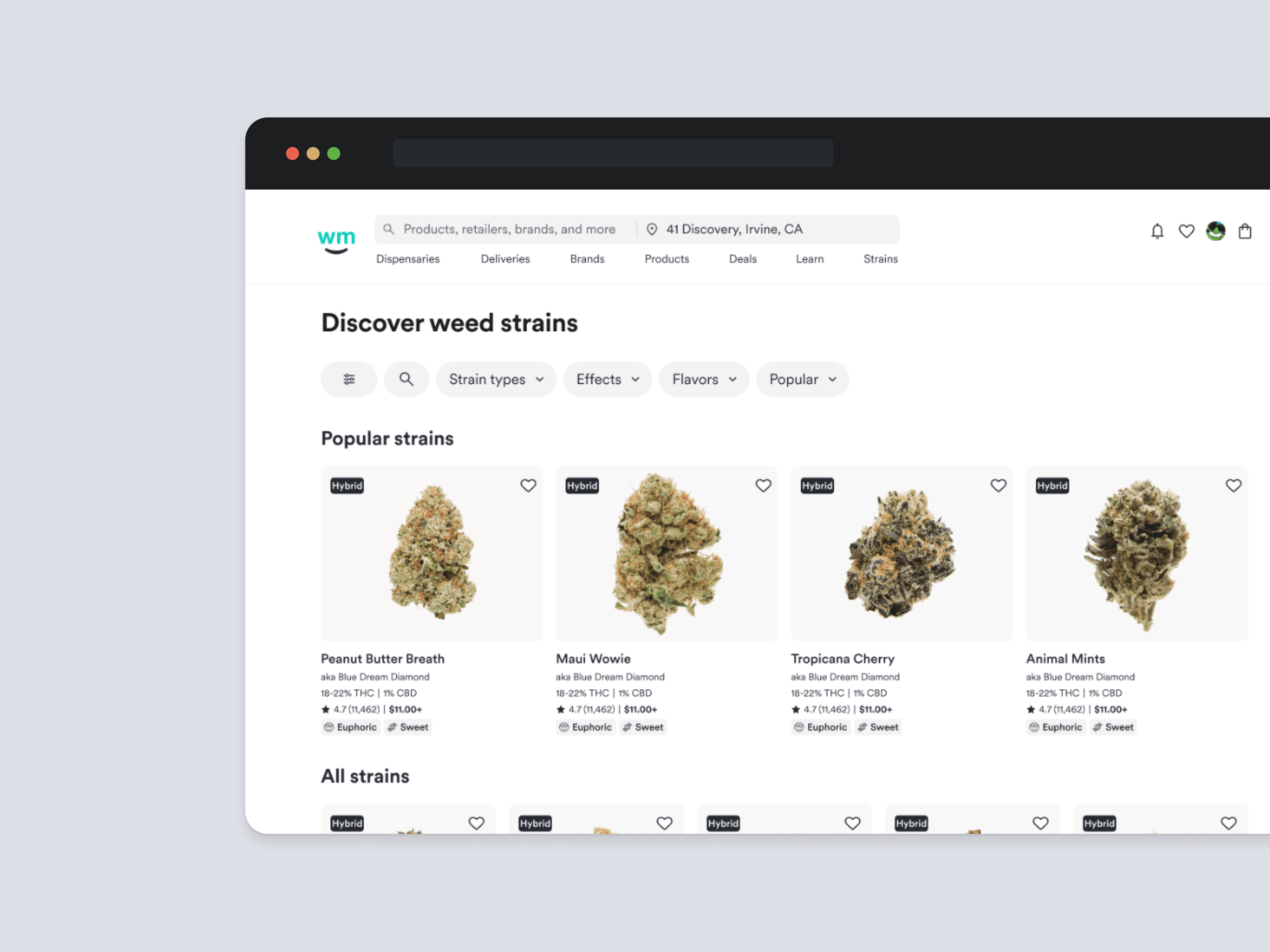
The redesigned strains experience focused on clarity, hierarchy, and intent-driven discovery to better support how users explore and evaluate products.
Key improvements include:
Clear visual hierarchy for strain name, type, potency, and effects
Intent-based filtering and sorting to reduce cognitive load during exploration
Greater consistency across strain listings and detail pages to build trust
Scalable design patterns capable of supporting thousands of products and vendors
The result was a more approachable, confidence-building experience that reduced friction and helped users move from exploration to action more efficiently.
Key Design Decisions
Scan-first layouts
Prioritized hierarchy and visual comparison over dense reporting so users could quickly assess strains and narrow options without cognitive overload.
Intent-driven discovery
Structured filters around how people choose (effects, use cases, potency) rather than internal taxonomies to better support real decision-making.
Consistency over customization
Standardized strain presentation across views to reduce cognitive load, build trust, and enable easier comparison at scale.
Progressive disclosure
Surfaced essential signals first, revealing deeper education only as users expressed intent to prevent decision paralysis.
Impact
This redesign reduced decision friction in strain discovery and established a scalable foundation for guiding users from exploration to confident product selection.
The work contributed to:
Improved clarity and usability across strain discovery and evaluation flows
Stronger alignment between user intent and product presentation
Reduced cognitive load when comparing strains across dispensaries
A more consistent, scalable foundation for future personalization, education, and experimentation
Cross-functional alignment on how strain data should be structured and surfaced across the platform
Beyond immediate UX improvements, this work influenced how discovery patterns are structured across Weedmaps’ consumer product, informing future iterations of filtering, categorization, and personalization.
This project reinforced the importance of designing discovery systems that scale not just in content, but in user confidence.
Note: Due to access limitations, visuals and metrics from this project are not included. The case study focuses on design thinking, approach, and impact.